Forum · Student writing · Immigration
England's Slow Collapse—and Why America Is Next
Britain used to rule a quarter of the planet. Today, it struggles to build a three-bedroom house outside London without a six-year planning dispute, a protected hedgerow, and an inquiry into whether the proposed kitchen extension might disturb the emotional well-being of a local
 🇺🇸
Brunswick · October 30, 2026 · 4 min read
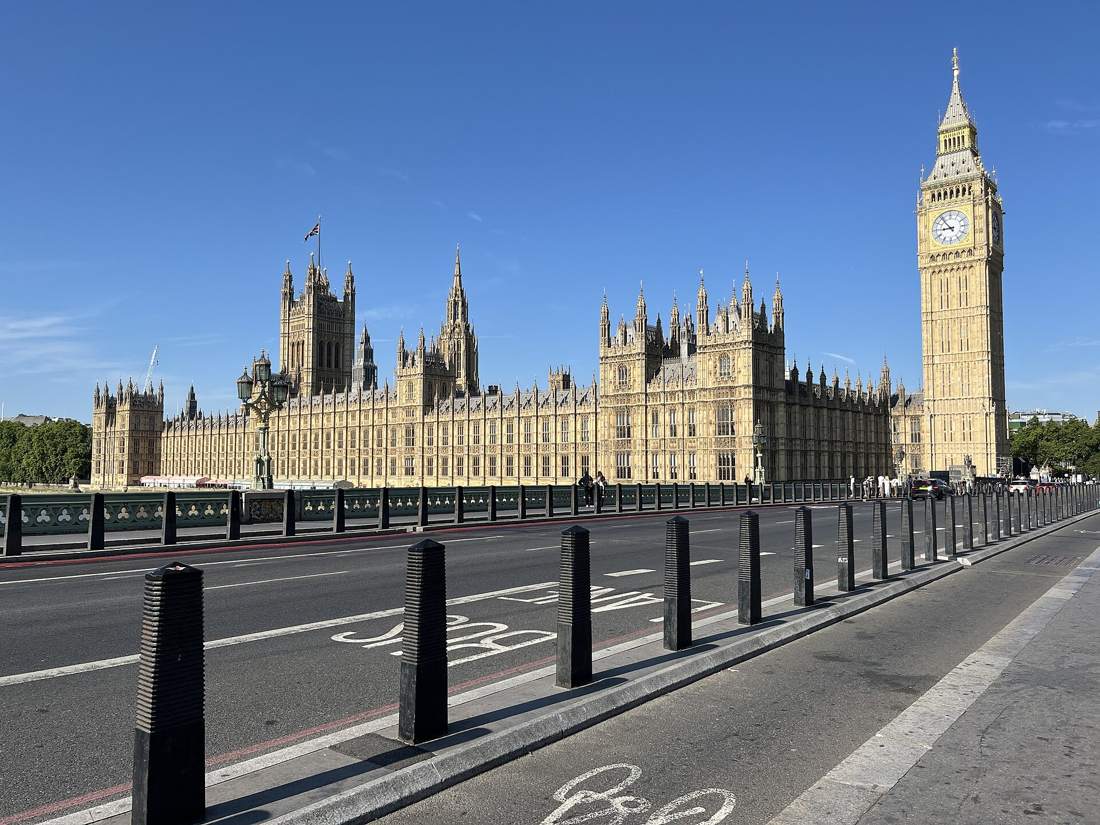
Palace of Westminster. Photo: ThatsTheBoss, CC0, via Wikimedia Commons.
Britain used to rule a quarter of the planet. Today, it struggles to build a three-bedroom house outside London without a six-year planning dispute, a protected hedgerow, and an inquiry into whether the proposed kitchen extension might disturb the emotional well-being of a local badger.
This is not quite the empire on which the sun never set.
In 2016, the British voted for Brexit, hoping to reclaim their sovereignty, control immigration, and restore some semblance of national dignity. Ten years later, they have successfully escaped Brussels, only to discover that the principal obstacle to British prosperity was not the European Union. It was, rather inconveniently, Britain.
Chart
Income per person
GDP per person, adjusted for inflation and prices
The economy remains sluggish, public services are overwhelmed, housing is unaffordable, and the average young person has approximately the same chance of owning a house in London as of inheriting Buckingham Palace.
Brexit was supposed to fix all this. Instead, Britain managed the remarkable feat of making trade with its largest economic partner more difficult while initially allowing immigration to reach record levels. Apparently, taking back control meant acquiring the exclusive right to make the same mistakes without foreign assistance.
Immigration is perhaps the most spectacular example of Britain's talent for political self-deception. Brexit supporters wanted fewer arrivals, businesses wanted more workers, universities wanted more foreign students, and the government wanted everyone to believe all these objectives were perfectly compatible.
For a while, the solution was simple: promise less immigration and deliver more. Annual net migration eventually approached a million people before falling sharply in recent years. The politicians seemed genuinely surprised that the public noticed.
Of course, immigration is not inherently disastrous. Immigrants fill essential jobs, create businesses, and contribute to the economy. But admitting hundreds of thousands of people into a country that already struggles to accommodate its existing population requires a rather old-fashioned supplementary policy: building somewhere for everyone to live.
This was apparently considered an unreasonable complication.
Britain's housing policy operates on the principle that everyone deserves an affordable home, provided nobody actually builds one. Local residents demand lower prices while opposing any construction that might make prices lower. Politicians promise hundreds of thousands of new houses, and planning committees respond by discussing the ecological significance of a nearby shrub.
Chart
Immigrants as a share of the population
People living in a country other than the one they were born in
The results are predictable. Young professionals spend half their salaries renting apartments that would embarrass a Victorian workhouse inspector. Couples delay marriage and children. Homeowners congratulate themselves on their rising property values while wondering why their grandchildren cannot afford to live nearby.
The National Health Service, meanwhile, has become a national religion. Everyone agrees it is sacred, nobody is permitted to question its fundamental structure, and obtaining an appointment sometimes requires an act of divine intervention.
Yet the real British crisis is not immigration, Brexit, or even housing. It is the widening gap between what the government promises and what the government can actually deliver.
“And yet, American cities have become increasingly skilled at reproducing British dysfunction.”
Britain still has extraordinary universities, financial institutions, cultural treasures, and entrepreneurs. But it has somehow created a political system in which nearly everyone agrees that the country needs more housing, better infrastructure, higher productivity, and more efficient services, while almost every attempt to achieve these objectives encounters an impressive coalition of people explaining why it cannot be done.
Which brings us, unfortunately, to America.
Americans tend to regard Britain's troubles with the affectionate superiority usually reserved for an elderly relative who insists that things were better before electricity. We have Silicon Valley, Wall Street, abundant natural resources, and the world's largest collection of billionaires. Surely we cannot suffer the same fate.
And yet, American cities have become increasingly skilled at reproducing British dysfunction.
In New York, San Francisco, and Boston, a reasonably successful young professional can earn an impressive salary and still discover that the principal requirement for homeownership is having purchased a house in 1987.
Homeowners demand affordable housing, provided it is constructed somewhere beyond the horizon. Local politicians pledge to address the crisis, then attend neighborhood meetings where residents explain that a four-story apartment building would permanently destroy the character of an area currently distinguished by a parking lot.
America has also imported Britain's peculiar habit of treating immigration as a substitute for coherent economic planning. Immigration can expand the workforce and contribute enormously to prosperity, but it cannot magically produce the additional homes, roads, schools, and hospitals that a growing population requires.

Naturalization ceremony. Photo: GlacierNPS, Public domain, via Wikimedia Commons.
Added by Counterpart editors.
Nor does simply reducing immigration repair decades of underbuilding. America's housing shortage has acquired a remarkable political resilience: it survives elections, economic booms, recessions, and almost every proposal intended to solve it.
There are important differences. America remains more economically dynamic, more geographically flexible, and better positioned to generate new industries. Britain has less room for error and carries the added burden of a particularly elaborate national bureaucracy.
But the underlying danger is familiar.
A prosperous society gradually becomes organized around protecting what existing property owners and established institutions already possess. Building becomes difficult, reform becomes politically hazardous, and the young are invited to finance arrangements from which they increasingly struggle to benefit.
Eventually, people stop believing the system works for them.
Britain has not collapsed. That would be far too dramatic, and probably require planning permission. Instead, it has demonstrated how a country can remain wealthy, civilized, and outwardly successful while making ordinary life progressively more difficult.
America should pay attention.
After all, the British invented many of the political institutions Americans inherited. It would be unfortunate if we also inherited their latest innovation: managing national decline so gradually that nobody feels responsible for it.
Now talk about it.
Discussion
Reply to this piece. You do not need to be published.
No discussion yet.
Create an account to reply or like.